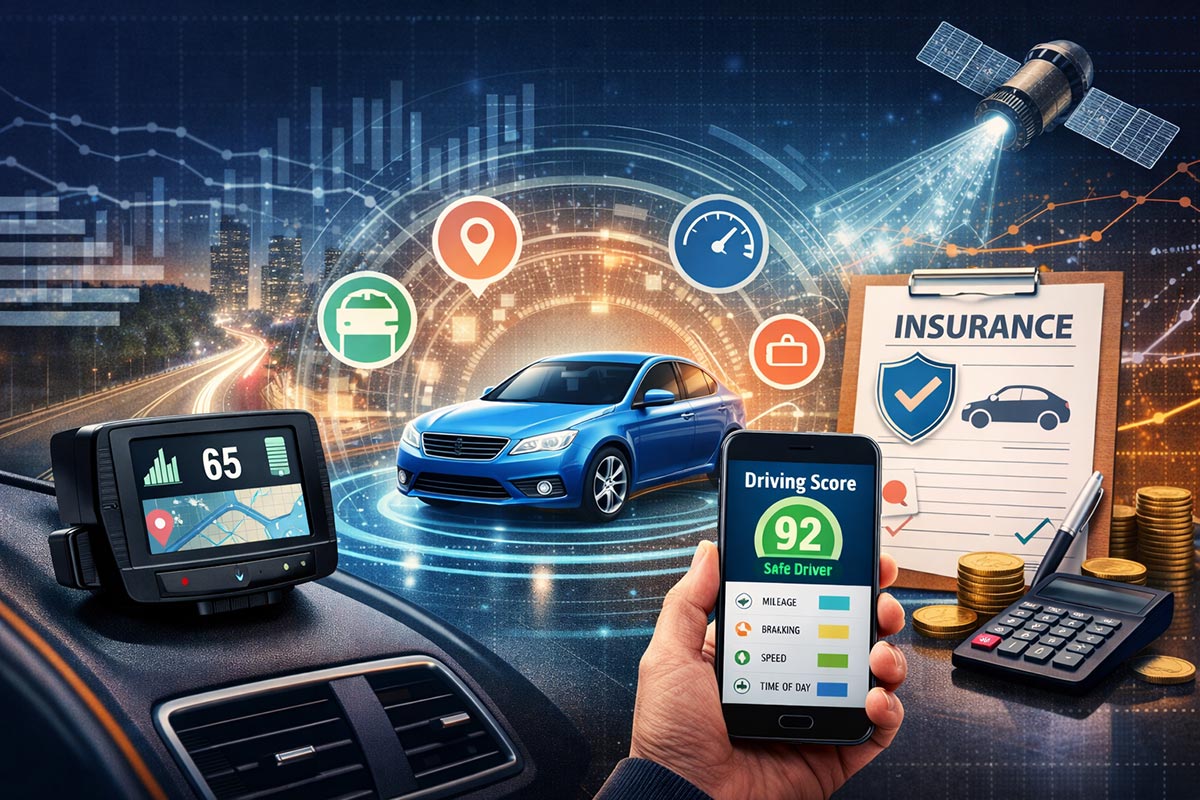
The vehicle insurance industry is undergoing a profound transformation driven by technology, data, and changing consumer expectations. One of the most influential developments in recent years is the rise of telematics and usage-based insurance (UBI). These innovations are reshaping how insurers assess risk, price policies, and interact with customers, while also encouraging safer driving habits and more personalized coverage.
What Is Telematics in Vehicle Insurance?
Telematics refers to technology that collects and transmits data from a vehicle in real time. This is typically done through a small device installed in the car, a built-in system provided by the manufacturer, or even a smartphone app. Telematics systems track a range of driving behaviors, such as speed, acceleration, braking patterns, cornering, time of day the vehicle is driven, and total distance traveled.
Insurers use this data to gain a clearer picture of how, when, and how often a vehicle is driven. Unlike traditional insurance models, which rely heavily on generalized factors like age, gender, location, and claims history, telematics allows pricing to be based on actual driving behavior.
Understanding Usage-Based Insurance (UBI)
Usage-based insurance is a pricing model that leverages telematics data to tailor premiums more accurately. There are two main types of UBI:
- Pay-As-You-Drive (PAYD): Premiums are based primarily on mileage. Drivers who use their vehicles less often typically pay lower premiums.
- Pay-How-You-Drive (PHYD): Premiums are influenced by driving behavior, rewarding safer drivers with discounts.
In some cases, insurers combine both models to create even more refined pricing structures. For consumers, this means that careful, low-risk driving can directly translate into financial savings.
Benefits for Drivers
One of the most appealing aspects of telematics-based insurance is fairness. Safe drivers who may have been overcharged under traditional rating systems now have the opportunity to prove their low-risk behavior. Young drivers, in particular, often benefit from UBI, as they can offset higher age-based premiums by demonstrating responsible driving habits.
Telematics also promotes awareness. Many insurance apps provide feedback, scores, and tips that help drivers understand their behavior and improve over time. This can lead to safer roads, fewer accidents, and reduced stress behind the wheel.
Additionally, UBI can be especially attractive for people who drive infrequently, such as remote workers, retirees, or urban residents who rely on public transportation. Instead of paying a flat annual rate, they pay premiums that reflect their actual vehicle usage.
Advantages for Insurers
From an insurer’s perspective, telematics offers improved risk assessment and pricing accuracy. Access to detailed driving data allows insurers to better predict claims, reduce fraud, and design products that align more closely with individual risk profiles.
Telematics also strengthens customer engagement. Regular feedback and digital touchpoints create ongoing interaction, rather than limiting communication to policy renewals or claims. This can increase customer loyalty and provide opportunities for cross-selling additional services.
Furthermore, by encouraging safer driving, insurers may see lower claims frequency and severity, which can improve overall profitability.
Challenges and Concerns
Despite its benefits, telematics-based insurance is not without challenges. Privacy is one of the most frequently cited concerns. Some drivers are uncomfortable with the idea of insurers tracking their movements, even if the data is used solely for pricing and safety purposes. Transparency about what data is collected, how it is stored, and how it is used is essential to building trust.
Another concern is data interpretation. Not all driving behavior is equally risky in every context. For example, sudden braking might indicate unsafe driving—or it could reflect defensive driving in heavy traffic. Insurers must use sophisticated analytics and contextual understanding to avoid unfair penalties.
There is also the issue of accessibility. Older vehicles may not support built-in telematics, and not all drivers are comfortable using smartphone-based solutions. Ensuring that UBI products are inclusive and easy to use remains an ongoing challenge.
The Future of Telematics in Vehicle Insurance
As connected vehicles become more common and data analytics grow more advanced, telematics is expected to play an even larger role in vehicle insurance. Integration with advanced driver-assistance systems (ADAS) and, eventually, autonomous vehicle technology will further change how risk is defined and insured.
In the long term, insurance may shift from being vehicle-centric to behavior- and mobility-centric, covering how people move rather than what they own. Telematics will be central to this evolution, enabling dynamic, flexible, and personalized insurance solutions.
Conclusion
Telematics and usage-based insurance represent a significant shift in the vehicle insurance landscape. By aligning premiums with real-world driving behavior, these innovations offer greater fairness, promote safer roads, and foster stronger relationships between insurers and customers. While challenges around privacy, data interpretation, and accessibility remain, the overall trajectory points toward a more transparent, personalized, and technology-driven future for vehicle insurance.
About the Author